
As my career winds down, I am reminded of the advice veterans gave me that I was too young and dumb to hear. Mainly, the phrase “check yourself before you wreck yourself” comes to mind. As a kid right out of high school, I dismissed it as a corny line to attempt to connect with my youth, but as the years have flown by, I have finally understood what they meant. In an industry where we are tasked with displaying physical strength on a consistent basis, it is far more important to strengthen our mental health behind the curtain.
One of the things I wish I had known then, and know now, is the mental fitness that professional wrestling demands of you. There’s a vulnerability in you, yourself becoming a product that’s completely reliant on a promoter’s perception of your worth to audience cheers to social media engagement. At the risk of sounding pretentious, wrestling has a profound unspoken intimacy. We court fans through the physicality of our bodies, conveying human suffering for instant gratification, while moving stories forward in service of the audience in real time, which can be incredibly taxing on the mind. From a scientific standpoint, so many parts of the brain are firing off all at once, making the adrenaline we experience in the ring even more intense. After great matches where it comes together, we feel the highest of highs. But on the other hand, you can only imagine the lingering inner turmoil and disappointment when matches are not what you hope they will be. When the live audience and the one online remind you through agonizing discourse about your performance.
When you bomb, it feels like endless aftershocks from an earthquake. It sticks with you. I cannot tell you the number of times earlier in my career that, as soon as the match ended and I talked to my opponent afterward, I would check social media comment sections to see myself completely obliterated by people who have nothing positive to say after I thought I gave it my all. Of course, feedback is necessary, and when you don’t do a good job, you should know that there’s room for improvement. But a lot of what happens online is snark competitions for the most creative insults, with the irony being that their quips are low-hanging fruit that wouldn’t give me a clue how to serve my audience better. But the impact is real, and my intention as a performer to give the audience something to enjoy is not really considered. I can remember one of the worst matches I’ve ever had was streaming worldwide; I was sitting in my hotel room at 4:00 am, reading the comments repeatedly about how bad I was. I knew that the performance was bad. But their comments removed my humanity, and I, in turn, removed my humanity. I refused to give myself grace; I just let my heart bleed out until I had my next match. I come from an acting background; I have tough skin, and I’ve worked with major stars who were in television and film. I have been read to filth in auditions. Nothing, and I mean nothing, has cut me like the Triller live comments. Horrific. Every wrestler who goes through that abuse understands the amount of strength that it takes to go through that curtain for the next match after a flop. It feels like you are moving mountains.
What I’ve learned from the whirlwind of live performance is to live in the moment each match. For me to be my best, it must be about me and the people in the room. Nothing else matters. Once the match ends, decompression is key. It isn’t helpful to check the hashtags on social media minutes after the match ends. I take the time to check in with the person I worked with, and then I sit in silence (or as much of it as I can). I allow myself to feel my own thoughts, positive and negative, while letting my body calm down and return to a state not ruled by nerves, adrenaline, or my ego’s desire to excel. Once I feel that reset, I will talk to the booker/promoter about their feedback and a few people whose opinions I really want to hear. And once that’s over, I make the decision to make the match a memory. I typically do not consume wrestling content after my match on weekends when I work. I will go to my hotel and immerse myself in other forms of entertainment or drive home and listen to video essays. Typically, the following morning, I will tend to social media and do all the reposting required of being a public figure.
In June 2020, I found myself constantly questioning, “How the fuck do I move in this space as a Black man?” You learn with time and understanding that you are moving in an industry that’s largely predicated on the advancement and promotion of whiteness. It always confuses me that the Black athlete, who dominates sports for the most part, is rarely reflected in the one that’s predetermined. But that is what the gag is, whiteness has the stranglehold because what we do has a script. “The Booker” has the power to determine what the public receives as God-given talent versus true points on a board if we were football players. And even looking back at my own fandom, I realized with greater understanding that Dusty Rhodes was just making a parody to a certain degree of what sermons were like in the Black church to appease white audiences. In my tape study and reflection on my fandom, I kept seeing blaccent used by non-Black performers to convey seriousness, coolness, and the now-overused “aura.” I hear my people, but I damn sure do not see them! It was very difficult for me to understand how I saw people who looked like me, who talked like me, who came from the same places that I came from, positioned as less than their non-Black counterparts, who are seen as more legitimate, bigger stars. How do I move seeing a Black woman who created a major company’s star in the women’s division be so disrespected after exiting the company by her employer, and seeing the cowardice of her co-workers play out in real time? How do we compete in the indie scene where cultural appropriation and exclusion are even more apparent, and the largest company in the indies relegated its Black representation to one show after midnight with no promotion? And now I’m tasked with its curation after a fanbase resented yet expected greatness from said show? How do I not feel like shit? How do I move?
It affected me for a while knowing that if I wanted to achieve what people would consider the largest amount of success this industry has to offer, I would encounter people every day who vote against my personhood as a Black queer man, and if they didn’t vote against it, they just have no clue about my experience. It’s the kind of reckoning that happens at workplaces across this country and around the world, for that matter. Seeing Samoan wrestlers specifically be able to express themselves in the way that I feel people I grew up in a predominantly Black neighborhood expressed themselves felt gaslighting and disjointed. Once again, I hear my people, but I am not seeing them. And in no way is this discrediting the incredible strides that have happened on the indies to the majors over the last decade. But therein lies the problem for me: why did it take until the late 2010s to early 2020s for substantial pendulum swings to happen?
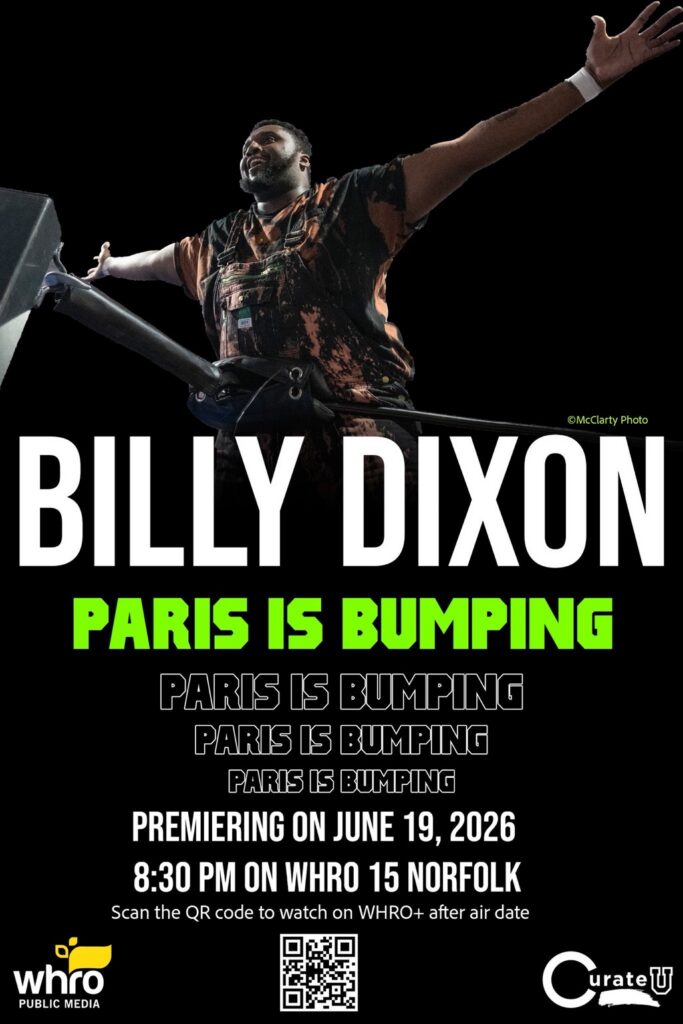
I was consumed by bitterness after finding out what really happened behind the curtain; it’s like when Dorothy finally meets the Wizard of Oz. Understanding these truths about the industry made me act in ways that were both positive and negative for my career. I found refuge in places that understood I wanted to be represented without compromise, and I created some of the best work of my career, which I remain proud of to this day. I really appreciate places like ASÉ, Enjoy, F1ght Club, and 880 Wrestling, just to name a few. I also created my own spaces to create with like-minded individuals to make some of the most daring wrestling content I believe has ever been created, with Paris is Bumping. But I also made choices that were not good; I judged people who still worked for companies that I did not believe had decent morals or ethics. And being so vocal and so defiant for what I believed in cost me what could have been career-building opportunities because so many different people could read the same sentence in so many ways. And the tug of war of all the positives and negatives that I did with my career after I really understood the business I was in left me in a place where my mental health decayed even further. Years later, I now have the knowledge from listening to my peers who are in positions in these companies. Their approach to making change just isn’t the same as mine, and I don’t feel it’s fair to invalidate the journey of someone whose shoes I’m not in.
After having one of the most important matches of my life—the first-ever Black Deathmatch Main-Event against Hoodfoot at GCW’s For The Culture 2022 in Dallas—I felt like I reached the pinnacle of my career. As great as the ovation of the crowd was, the vibration of the sound felt like the screams were hitting a glass ceiling, and, in that moment, I knew as great as this performance was, it still wouldn’t be enough to prove that I deserved more of an opportunity. When an indie icon like Joey Janela tells you that you got the biggest pop of the week and there is zero follow-up, the mind tells you that the end is near. Some of that is imposter syndrome, and some of that is exactly knowing who I was dealing with in wrestling. I was chasing the dragon of breaking down barriers, and it felt like it was for nothing. I started drinking heavily, abusing substances, and settling into that misery that bitterness makes you feel is a home. Now, all these years later, I know that it’s a prison. I would sit in my car, about to drive to promotions I had great relationships with, and couldn’t turn the key to start my car. I’d sit in silence for about 15 minutes before sending the promoter a message that I couldn’t make the show and cancel. I did this at least a dozen times that year. One afternoon, I took an enormous amount of shrooms and posted to the Internet that I wanted to retire from wrestling and announced it without any regard for what would happen next. I knew in my heart, the second after I hit send, that that was not how I truly felt, but I thought it gave me the out I desperately wanted and needed. Obviously, we know now that that’s not the case. I came back five months later and really meandered around the Indies, not improving on any of my bad habits, and kind of just tucking my tail between my legs, but feeling happy to be here.
In the second year of my return to wrestling, I started talk therapy, where I quickly learned the truth: I let professional wrestling consume my life. For the years I trained I was in that wrestling ring at least four times a week from around 6:00 PM to 1:00 AM working on my craft watching tape and enjoying being immersed in this world that I loved as a child that I now get to pursue as my dream. Everything in my life was in service to wrestling. All the money I would make from my 9-5 job went towards getting new gear, putting things in my car for shows, and making sure I could make all the towns. It did not matter if any family/friend occasion or personal night of enjoyment I may have desperately wanted to have came up; wrestling would always come first. I cannot tell you how many relationships went down the drain because I would not refuse to go to wrestling training or do a show. It was so bad that I would at times not respond to my birth name; it would get delayed reactions.
I had to learn what would work for me, and that meant putting myself in the driver’s seat and only working in service for me, the human first and foremost, and at some point, down the line on that list, I, as a performer, could come into play. Making space for vacations or doing things with friends that may or may not coincide with potential future show dates felt, at first, like I was doing something wrong, but I quickly found myself enjoying connecting with people and getting something out of just being a normal person. I learned that I did not have to carry on this heavy responsibility or the implied expectation that my work means I must represent an entire group of people with all the different identities I happen to have. By existing, by doing the work, and by what I hope to be excelling in the craft, I create the history and representation that people may seek. My work should never feel like a burden, but only a blessing that first and foremost enriches my soul and what I hope to be, to the enjoyment of the viewer. And over the last three years, I have felt the happiest with my work in the ring, and I have felt the healthiest with my relationship with professional wrestling. I can tell you that I do not look at the comments anymore because I do not seek to hurt my own feelings. I do not party anywhere near as much as I used to do, and when I do, I party far more responsibly.
It took me 10 years to realize that it is OK for Billy Dixon, the creation, to be in a box accessed for a small part of my life, and not for all of it. And now I can sit here telling you that I am looking forward to wrapping up my career at the end of the summer, from a place of actual gratitude and reflection on the journey, with its highs and lows. I’m the type who learns lessons the hard way. I am working diligently with my therapist to fix that. It’s hard chasing your dreams because at any given moment, you can find out that you’ve actually walked into a nightmare. But I am thankful that I have learned the lesson that I refused to hear when I was younger. And I’m happy to tell you that I did in fact check myself before I wrecked myself.
***
Billy Dixon is an indie circuit veteran, LGBTQ+ advocate, and cultural force who’s never let the business define his boundaries. Catch his docu-short, Billy Dixon: Paris is Bumping, premiering on PBS Friday, June 19 at 8:30pm EST. He’s back in the squared circle, too.
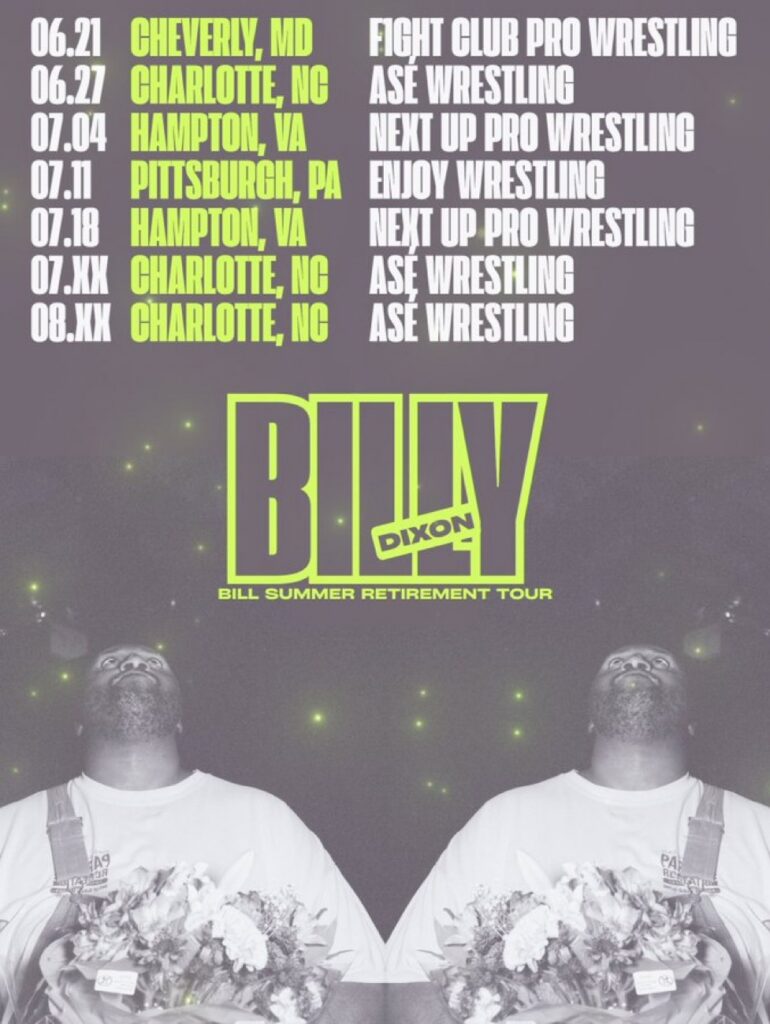
Stay locked on X/Twitter @TheBillyDixon for tour dates and what’s next.